
Thoughts VS Opinions “Digital Downloads and Ownership”
For a while now I have looked at the games industry from a rather long distance away when it comes to their business practices. Slowly we have begun to see that companies feel that the consumer isn’t entitled to digital products that they pay their well earned cash for.
Today my mind completely snapped when I found out that not only was a game that I purchased a while ago not mine to play whenever I felt like it, but that my games even had expiration dates like an unused milk carton in a fridge.
I was going to write this article a while back during my purchase of THQ’s Darksiders 2. When I bought that game, I opened it to find that not only was the game that I paid for containing DLC that wasn’t readily available for me to use but that even through buying the limited edition, I wasn’t entitled to the season pass even though I paid extra cash for the preorder. I remember walking into the store on release day and handing over my prepaid preorder slip in excited anticipation as the spotty guy behind the counter presented me my game. Slowly putting it into my bag, the cashier then with a grin only a mother could love advertised to me that I could pay extra money for this downloadable content discount and that it didn’t come with the limited edition of the game itself. My face fell as I felt the soul of my previous assumed insentive slipped through my fingers like grains of sand. I held my head up high though and took the game home to play.

“Pay now and we will give you this stuff when we feel like it! YAY!”
Once home I opened the case and what fell out was two bonus content slips for me to redeem. Jumping on the internet I headed to the THQ website to redeem my prize only to find out that one of the extra pieces of content wasn’t available to download. So basically I had paid extra money for something that I didn’t even own? Seriously? Why didn’t I just buy the standard game and wait till this content was available? I felt slightly cheated and a little betrayed.
Other companies are at fault for this too. Capcom has always been a target for this kind of thing through their attempt to sell the gamer locked away software on a disc that can only be accessed through paying for it digitally. Gearbox’s Borderlands 2 is also giving us the option of paying for something now that we won’t own on release day. Not only that but for all we know the content that they want us to pay for might be half arsed to say the least. DLC has never been what it used to be like in the days of Half Life and Unreal Tournament. Back then you could buy a full on expansion pack for £10 that was booming with content and sometimes made you spend triple the amount of time you originally did with the game. Now though you have to pay for that content before it is even ready and for all we known it might not even be polished, OR ours to own for the rest of time.
This brings us to today and I found myself needing to reorganise my computer hard drive. I only needed a little more space free and so decided that I should remove the heavy GB munching Splinter Cell: Conviction until the day that I wanted to play on it again. Before doing so though I headed over to the Ubisoft website to make sure that my download history was still available and that internet ghosts hadn’t accidently taken it from me, what I found were not ghosts but something even more horrifying.
It seems that Ubisoft’s DRM days aren’t truly over yet, because for anyone who downloads a game from them is only entitled to download it for 30 days. Period.
I spent most of today’s early morning scanning around the internet trying to find a topic saying that what I feared wasn’t true. To no luck though, my misfortune was indeed real. For the first time ever I never really owned a full priced game I had digitally downloaded. While services like Steam, Origin, PSN and XBLA have given us the ability to always reuse our paid for products. I had officially found a gaming company that not only took money I previously felt they deserved, but also given me a product that had a chain tied onto it via their belt buckle.
From this day forth I have decided never to buy a Ubisoft game again. Even though I love their recent Rayman reboot and clapped at their upcoming Watch Dogs, I have officially decided that the company is not deserving of my money. Sure I will play their games till they fall into the abyss of bankruptcy, but I will play their games knowing that they didn’t receive a cent from me. Many of you may think that I may pirate their future games but as an honest gamer and consumer I would never do such a thing such as that. This is why rental services like Blockbuster and Lovefilm come in handy. This is why from now on if I see a company steer me wrong, I will not give them the benefit of seeing me buy a full priced game that is instead just a 30 day rental. I have my rental subscription for that.
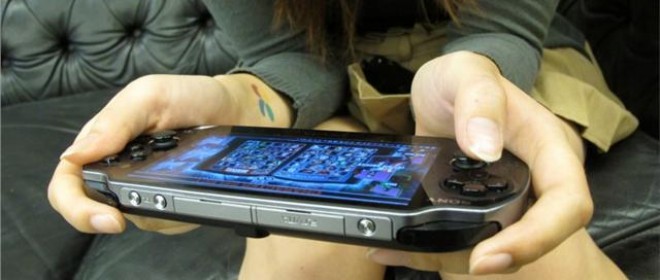
Right now everything is going digital. While I see digital downloads for things like the PS Vita as a great thing, it brings the question of “Does digital take away ownership from the consumer?”

“It is time to give back the game sir, you don’t own it even though you paid for it!”
When companies rise and then fall, where do all these downloads go for the person who purchased them? I still have DVDs from years ago that I can simply pop into my player and watch whenever I want. Though if I buy it on the iTunes store and Apple one day decide to close up shop, does that mean my ownership is gone forever?
Recently the company Onlive decided that it was going to fire most of its dedicated employees while its Judas-like CEO decided to bathe in a bath of the money its users gave him. If the company had decided to completely disappear, what would have happened to all those games that people had purchased through them? If the industry ends up heading towards yet another video game crash, does this mean that everything we have purchased through our beloved gaming services will be gone for good until the day we can purchase it digitally AGAIN.
Maybe from now on before we are about to throw our money at games we want digitally, we should first step back and think about our long term ownership.
I don’t know about you…but I miss the old days.
“Thoughts VS Opinions is where our writers express their thoughts on games and news. Feel free to comment below on what you think.”

The Game Scientist
Technically this isn’t a new thing. Most game publishers and developers will say that you are not buying a ‘copy’, but a ‘license’ to play the game. Unfortunately we have to agree to this as it states it in that boring and long wall of text “Terms of Agreement” we keep skipping over so we could see our boobies or gore in our favorite games.
I think this is done to differentiate digital product A from digital product B, when there isn’t a difference. Back when games were transferred via CDs and cartridges the hardware containing the games could wear out in time, so used copies might deteriorate compared to new versions. Now with games going digital, so long as anyone has the requirements for that software there is not deterioration. So a “used’ copy of a digital product has no difference of a “new” digital product – and game developers do NOT want the used game market sneaking into the digital market. So basically this is their ‘legal’ way of stating that there can never be “used” sales or rents of digital products.
Your arguments against this kind of business deal, Josh, are ones that many people have voiced concern about. I got a great deal earlier this summer for “Batman: Arkham City” on Steam, but only realized that I can install the copy four more times if I wish to play it again. Many people still worry that if Steam (or any other digital distribution service) ever gets shut down, then how would they be able to play all of their games? It’s a scary ‘what if’ scenario that I assume several gamers are afraid of, and I’m one of them.
To me it just shows that the business behind these games might be horrible. I hate judging a game by its business practice, but I hate having to open more of my wallet to promises of nothing.
Noir_Proxy
Yeah this definately isn’t a new thing. I think recently it has just started to cross the line for me, especially after realising that purchasing from Ubisoft is pretty much a scam. The only thing we can do right now is see how the future of the digital market unfolds. I am sure it will be anarchy if Steam ever goes away.
I would never judge a game based on a company’s business practice as obviously those decisions are generally made by the publisher and not the developer. I could have dropped Darksiders 2’s score down for judging the company but I didn’t because it actually didn’t affect the overall quality of the game. The same can’t be said for something like Capcom’s Asura’s Wrath, which makes you pay extra money for the actual ending, so I am not looking forward to going back and writing the review for that game.
The Game Scientist
Technically this isn’t a new thing. Most game publishers and developers will say that you are not buying a ‘copy’, but a ‘license’ to play the game. Unfortunately we have to agree to this as it states it in that boring and long wall of text “Terms of Agreement” we keep skipping over so we could see our boobies or gore in our favorite games.
I think this is done to differentiate digital product A from digital product B, when there isn’t a difference. Back when games were transferred via CDs and cartridges the hardware containing the games could wear out in time, so used copies might deteriorate compared to new versions. Now with games going digital, so long as anyone has the requirements for that software there is not deterioration. So a “used’ copy of a digital product has no difference of a “new” digital product – and game developers do NOT want the used game market sneaking into the digital market. So basically this is their ‘legal’ way of stating that there can never be “used” sales or rents of digital products.
Your arguments against this kind of business deal, Josh, are ones that many people have voiced concern about. I got a great deal earlier this summer for “Batman: Arkham City” on Steam, but only realized that I can install the copy four more times if I wish to play it again. Many people still worry that if Steam (or any other digital distribution service) ever gets shut down, then how would they be able to play all of their games? It’s a scary ‘what if’ scenario that I assume several gamers are afraid of, and I’m one of them.
To me it just shows that the business behind these games might be horrible. I hate judging a game by its business practice, but I hate having to open more of my wallet to promises of nothing.
Noir_Proxy
Yeah this definately isn’t a new thing. I think recently it has just started to cross the line for me, especially after realising that purchasing from Ubisoft is pretty much a scam. The only thing we can do right now is see how the future of the digital market unfolds. I am sure it will be anarchy if Steam ever goes away.
I would never judge a game based on a company’s business practice as obviously those decisions are generally made by the publisher and not the developer. I could have dropped Darksiders 2’s score down for judging the company but I didn’t because it actually didn’t affect the overall quality of the game. The same can’t be said for something like Capcom’s Asura’s Wrath, which makes you pay extra money for the actual ending, so I am not looking forward to going back and writing the review for that game.